
My AC Is Not Cooling Enough: What Does It Mean?
When your AC is running but the room remains warm, there may be an underlying cooling problem. Many homeowners face this issue during hot summer months. The AC may operate continuously without reaching the desired temperature. In some cases, the unit produces cool air but does not cool the room properly.
The problem can occur because of dirty filters, low refrigerant, blocked coils, or compressor issues. Electrical faults can also affect the cooling performance of your air conditioner. Understanding the cause can help you choose the right solution.
If your AC is not cooling enough, avoid ignoring the problem for too long. Continued operation can increase electricity consumption and strain important components. Professional inspection can identify the exact cause and prevent further damage.
Why Is My AC Not Cooling Properly?
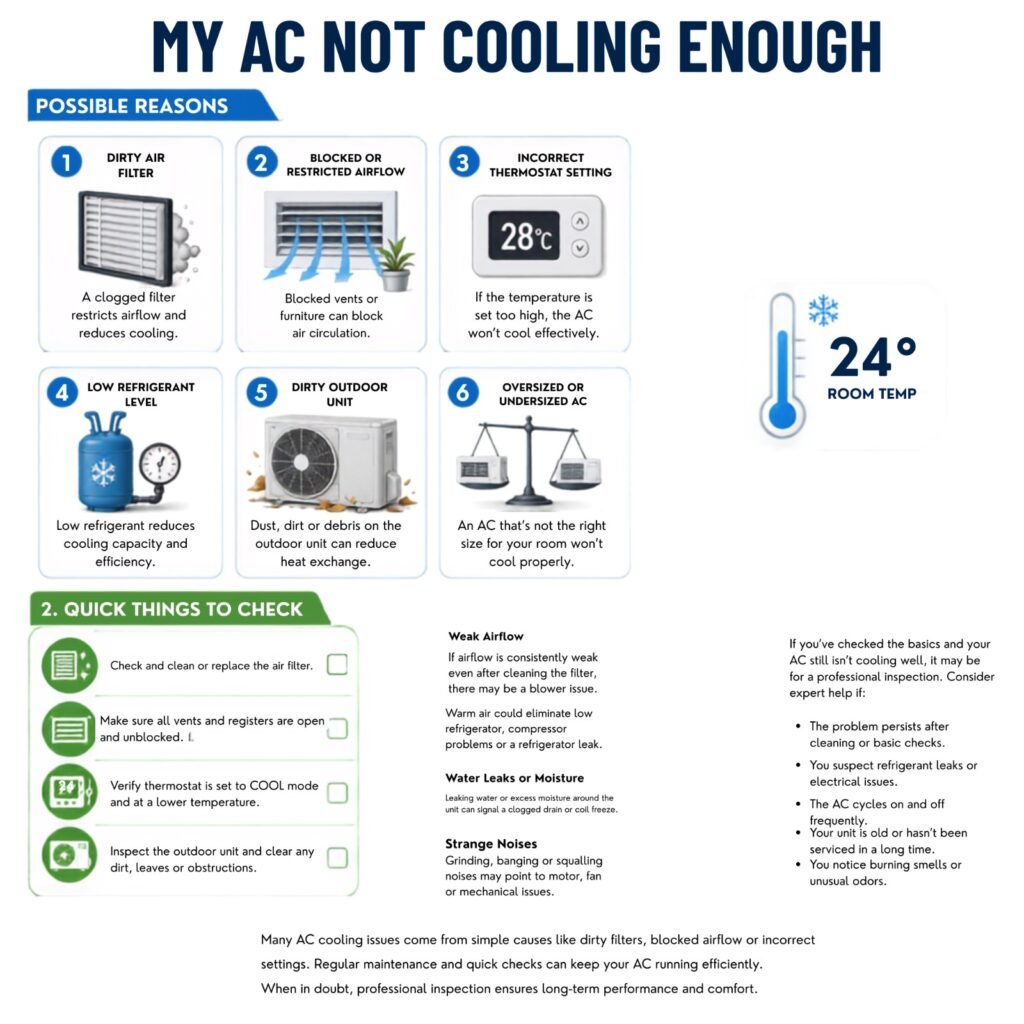
There are several reasons why an AC may stop providing sufficient cooling. Some problems are simple and can be corrected through basic maintenance. Other issues require professional AC repair and technical inspection.
Dirty or Clogged Air Filter
A dirty air filter can restrict airflow through your air conditioner. Restricted airflow reduces the amount of cool air entering the room. Dust can accumulate quickly when filters are not cleaned regularly.
A clogged filter can also make your AC work harder. This may increase electricity consumption and reduce cooling efficiency. Regular filter cleaning is therefore essential for better AC performance.
How to Check the AC Filter
Turn off the AC before checking the filter. Remove the filter carefully from the indoor unit. Clean washable filters using water and allow them to dry completely.
Replace damaged or excessively dirty filters when necessary. Professional AC service can help maintain proper airflow and cooling performance.
Low Refrigerant or AC Gas
Low refrigerant is another common reason for poor AC cooling. Refrigerant absorbs heat from indoor air during the cooling process. Insufficient refrigerant can prevent the system from cooling effectively.
Low refrigerant may result from leakage in the refrigerant circuit. Simply adding gas may not solve the problem permanently. A technician should locate and repair the leakage first.
Signs of Low AC Gas
Your AC may take longer to cool the room. The indoor unit may produce weak or insufficiently cool air. Ice can sometimes develop around the evaporator coil.
Electricity consumption may also increase because the compressor runs longer. Professional refrigerant testing can confirm whether the system has adequate gas.
AC Running but Not Cooling
An AC running but not cooling properly can indicate several technical problems. The indoor fan may operate while the compressor struggles to cool the refrigerant. Outdoor unit problems can also affect overall cooling.
The condenser may become dirty and restrict heat dissipation. A faulty capacitor can prevent the compressor from starting correctly. Electrical problems can also interrupt normal compressor operation.
AC Outdoor Unit Problems
The outdoor unit plays an important role in removing heat from your room. Its condenser coil needs sufficient airflow for efficient heat transfer. Dust and debris can reduce condenser performance.
The outdoor fan should also operate correctly during cooling. A faulty fan motor can cause overheating and reduced cooling. Professional AC repair can identify outdoor unit problems safely.
Why Condenser Cleaning Matters
A dirty condenser coil prevents efficient heat transfer. The compressor may then operate under higher pressure. This can increase energy consumption and reduce cooling capacity.
Regular condenser cleaning improves airflow around the outdoor unit. It also helps maintain efficient cooling during hot weather.
AC Blowing Warm Air
An AC blowing warm air can indicate a significant cooling problem. The issue may involve refrigerant, compressor, airflow, or electrical components. Incorrect thermostat settings can also cause unexpected temperature problems.
Check whether the AC is set to cooling mode. Make sure the selected temperature is lower than the current room temperature. If the problem continues, professional inspection may be necessary.
Check the Thermostat Setting
Set the AC to cooling mode before checking other components. Select a reasonable temperature for testing the cooling system. Avoid repeatedly changing the temperature during testing.
If the thermostat does not respond correctly, it may require inspection. A faulty thermostat can prevent the AC from maintaining the desired temperature.
Split AC Not Cooling Properly
A split AC not cooling properly can result from indoor or outdoor unit problems. Dirty filters are common causes of reduced cooling. Low refrigerant can also affect split AC performance.
The evaporator coil may become dirty after prolonged use. The blower can also accumulate dust and reduce airflow. Outdoor condenser problems can further reduce cooling efficiency.
Split AC Cooling Problem
A split AC cooling problem should be diagnosed systematically. Start by checking the filter and thermostat settings. Then inspect airflow from the indoor unit.
If airflow is weak, the filter or blower may require cleaning. If airflow is normal but cooling remains poor, refrigerant or compressor problems may exist.
Split AC Gas Leakage
Gas leakage can gradually reduce refrigerant levels. Small leaks may remain unnoticed for several months. Cooling performance can slowly decrease as refrigerant escapes.
A technician should identify the leakage before refilling refrigerant. Proper leakage repair helps prevent repeated gas filling expenses.
Window AC Not Cooling
A window AC not cooling can have several possible causes. Dirty filters and condenser coils commonly affect cooling performance. Poor ventilation around the outdoor section can also cause problems.
The compressor and fan should receive adequate airflow during operation. Blocked condenser areas can increase operating pressure. Professional servicing can restore proper cooling when basic cleaning does not help.
Window AC Cooling Problem
Check the air filter before calling for technical service. Clean the filter if it contains visible dust. Ensure that the rear side of the unit has sufficient ventilation.
If the AC still produces warm air, technical inspection may be required. Refrigerant, compressor, capacitor, or thermostat problems may be involved.
AC Compressor Problems
The compressor is one of the most important components of an air conditioner. It circulates refrigerant through the cooling system. A compressor problem can significantly reduce cooling performance.
A faulty capacitor may prevent the compressor from starting. Electrical faults can also cause abnormal compressor operation. Low refrigerant can create additional stress on the compressor.
Signs of Compressor Failure
The compressor may make unusual sounds during operation. The outdoor unit may run without producing sufficient cooling. The compressor can also overheat during extended operation.
Repeated tripping of the circuit breaker may indicate an electrical problem. Professional diagnosis is recommended before replacing expensive components.
Should You Replace the Compressor?
Compressor replacement depends on the actual fault and AC condition. Technicians should test electrical and mechanical components first. Replacement may not be necessary if another component causes the problem.
A professional inspection can help determine the most cost-effective solution. Avoid replacing the compressor without proper technical diagnosis.
AC Coil Cleaning and Cooling Performance
AC coils collect dust, dirt, and other particles during regular operation. Dirty coils reduce heat transfer and airflow efficiency. This can cause your AC to cool the room slowly.
Both indoor and outdoor coils require periodic cleaning. The evaporator coil handles indoor heat absorption. The condenser coil releases collected heat outside.
Dirty Evaporator Coil
A dirty evaporator coil can restrict airflow through the indoor unit. Dust buildup can also reduce heat absorption. The AC may then operate for longer periods.
Professional coil cleaning can restore airflow and cooling efficiency. Cleaning frequency depends on usage, environment, and indoor air quality.
Dirty Condenser Coil
The condenser coil releases heat absorbed from your room. Dirt buildup reduces its ability to release heat effectively. The compressor may then work harder to maintain cooling.
Regular condenser cleaning can improve overall AC efficiency. It can also help reduce unnecessary energy consumption.
AC Frozen Coil and Low Cooling
An AC frozen coil can cause weak airflow and poor cooling. Ice may develop around the evaporator coil during operation. Several conditions can contribute to coil freezing.
Low refrigerant can cause the evaporator temperature to fall excessively. Restricted airflow can also lead to freezing. A dirty filter is one possible cause of restricted airflow.
What Should You Do With a Frozen Coil?
Turn off the cooling mode if the coil is heavily frozen. Allow the ice to melt naturally before restarting the unit. Do not remove ice using sharp objects.
If freezing happens repeatedly, professional inspection is recommended. The technician can check airflow, refrigerant levels, and other components.
AC Fan or Blower Problems
The indoor blower distributes cooled air throughout the room. A faulty blower can reduce airflow significantly. Dust accumulation can also affect blower performance.
The outdoor fan helps remove heat from the condenser. A malfunctioning outdoor fan can cause overheating and poor cooling. Both fans should operate correctly during normal cooling.
Weak Airflow From AC
Weak airflow can indicate a dirty filter or blower problem. Blocked ducts or vents can also restrict air movement. A professional AC technician can identify the exact cause.
Improving airflow can significantly improve perceived cooling. Regular AC maintenance can help prevent repeated airflow problems.
AC Drain Blockage and Cooling Issues
A blocked AC drain can cause water leakage from the indoor unit. Excess moisture can affect indoor comfort and system performance. Drain blockage can also create unpleasant odors.
The condensate drain should remain clear during normal operation. Professional AC service can clean the drain line safely. Regular maintenance reduces the chances of recurring drainage problems.
Common Signs of Drain Blockage
Water may drip from the indoor AC unit. The drain pipe may discharge little or no water. Moisture may accumulate around the indoor unit.
Turn off the AC if significant water leakage occurs. Professional inspection can identify and clear the blockage.
How to Fix AC Not Cooling
Fixing an AC cooling problem requires identifying its actual cause. Start with simple checks before requesting professional assistance. Confirm the cooling mode and inspect the air filter.
Clean the filter if it is visibly dirty. Check whether the indoor unit provides sufficient airflow. Make sure the outdoor unit has adequate ventilation.
If these steps do not improve cooling, contact an AC technician. Refrigerant and electrical problems require professional tools and expertise.
Basic AC Troubleshooting
Follow these basic checks before scheduling AC repair:
- Check the thermostat temperature.
- Confirm that cooling mode is selected.
- Clean the indoor air filter.
- Check indoor airflow.
- Inspect the outdoor unit surroundings.
- Look for visible ice formation.
- Check for unusual sounds.
- Observe repeated electrical tripping.
- Check for water leakage.
- Contact a professional technician when needed.
These checks can identify simple issues quickly. Avoid opening electrical panels or refrigerant components yourself.
When Should You Book AC Repair?
You should book AC repair when basic troubleshooting does not solve the issue. Professional service is also recommended for repeated cooling problems. Ignoring technical faults can increase repair costs later.
Contact an AC technician if the compressor does not start. Professional assistance is also needed for refrigerant leakage. Electrical faults should always receive qualified technical attention.
AC Repair Near Me
Searching for an AC repair near me can help you find local technicians quickly. Local professionals can often provide faster inspection and repair services.
Choose technicians with relevant experience and proper diagnostic equipment. Ask about inspection charges and service coverage before booking.
AC Technician Near Me
An AC technician near me can inspect your system and identify cooling problems. Professional technicians can diagnose refrigerant, electrical, airflow, and mechanical faults.
Experienced technicians can also recommend suitable maintenance solutions. This helps prevent repeated cooling problems and unnecessary component replacement.
AC Service Near Me for Better Cooling
Regular maintenance can help prevent many common AC cooling problems. Professional AC service includes inspection, cleaning, and performance checks.
Technicians can clean filters, coils, blowers, and condenser components. They can also inspect refrigerant levels and electrical connections.
AC Cooling Service Near Me
Searching for AC cooling service near me can help you arrange professional assistance. Regular cooling service can improve system efficiency and airflow.
A service visit can also identify developing problems early. Early diagnosis may reduce the risk of expensive repairs.
How to Prevent AC Cooling Problems
Preventive maintenance is important for consistent AC performance. Clean the air filter according to manufacturer recommendations. Keep the outdoor unit free from dust and obstructions.
Avoid running the AC with a heavily clogged filter. Schedule professional servicing before peak summer usage. Regular maintenance can improve efficiency and extend equipment life.
Recommended AC Maintenance Practices
Clean or replace filters regularly. Keep doors and windows closed while cooling the room. Avoid blocking indoor AC airflow.
Keep furniture away from indoor vents and airflow paths. Ensure proper ventilation around the outdoor unit. Schedule professional maintenance when cooling performance declines.
Why Professional AC Repair Is Important
Professional repair helps identify the actual cause of poor cooling. Technicians use appropriate tools to inspect electrical and refrigerant systems. They can also test compressor and fan performance.
Attempting complex repairs without expertise can create additional damage. Refrigerant handling also requires proper equipment and procedures. Professional service provides a safer approach to technical AC problems.
Avoid Unnecessary Gas Refilling
Many homeowners assume low cooling always means low refrigerant. However, several other problems can produce similar symptoms. Repeated gas filling without leakage repair is not an effective solution.
A technician should check refrigerant pressure and inspect for leakage. Proper diagnosis can prevent unnecessary service expenses.
Conclusion: My AC Is Not Cooling Enough
If your AC is not cooling enough, several causes may be responsible. Dirty filters, low refrigerant, blocked coils, and compressor problems are common issues.
Simple maintenance can solve some cooling problems. However, persistent issues require professional inspection and AC repair. Delaying repairs can increase energy consumption and component stress.
Check the filter and thermostat before requesting service. If cooling remains weak, contact a qualified AC technician. Professional AC service can restore efficient cooling and improve indoor comfort.
Frequently Asked Questions About AC Cooling Problems
Why is my AC not cooling enough?
Your AC may have dirty filters, low refrigerant, or blocked coils. Compressor and fan problems can also reduce cooling performance.
Why is my AC running but not cooling?
The compressor, refrigerant system, condenser, or airflow may have a problem. Professional diagnosis can identify the exact cause.
Can low AC gas cause poor cooling?
Yes, low refrigerant can significantly reduce cooling performance. Refrigerant leakage should be checked before refilling gas.
How often should AC filters be cleaned?
Filter cleaning depends on usage and indoor air conditions. Regular cleaning helps maintain proper airflow and cooling efficiency.
Should I call an AC technician for weak cooling?
Yes, especially when basic cleaning does not improve cooling. A technician can identify technical problems and recommend suitable repairs.
Why is my split AC not cooling properly?
A split AC may have dirty filters, low refrigerant, frozen coils, or compressor issues. Outdoor unit problems can also reduce cooling.
Why is my window AC not cooling?
Dirty filters, condenser blockage, poor ventilation, and refrigerant problems can affect window AC cooling. Professional inspection may be required.
Can AC coil cleaning improve cooling?
Yes, clean coils allow better heat transfer and airflow. Regular coil cleaning can improve cooling efficiency and system performance.
What should I check when my AC blows warm air?
Check the thermostat and cooling mode first. Then inspect the filter and airflow. Persistent warm air requires professional inspection.
How can I prevent AC cooling problems?
Clean filters regularly and keep outdoor units unobstructed. Schedule professional AC maintenance to identify developing technical issues.